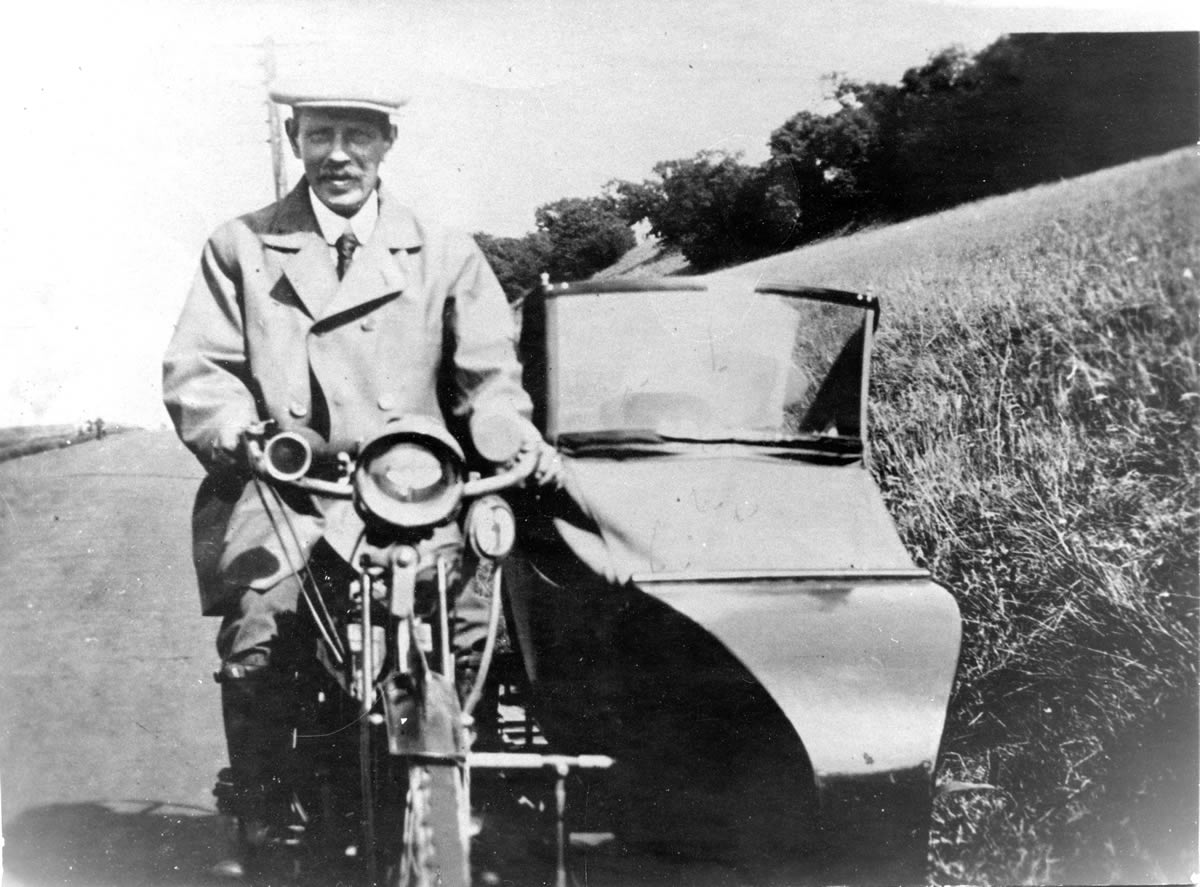
You may have already read my ramblings about learning to use
my first 1914 Triumph motorcycle -
http://www.go-faster.com/1914Triumph.html
Or my subsequent fun aquiring my Grandfathers 1911 Triumph and
getting it ship shape -
http://www.go-faster.com/1911Triumph.html
Or "racing" my 1914 at Brighton Speed Trials - http://www.go-faster.com/BrightonSpeedTrials2012.html
The world is full of beautifully restored original specification veteran bikes and my aim with this one is different.
Just as today people take a standard bike and improve it with upgrades, what could you have done in 1914 to make the ultimate sporting road bike. I will only be making changes that were available in 1914 and aim to get more power, less weight, equal/better handling and improved brakes. As my previous 1914 Triumph set a world record over a quarter mile - it should also set a new speed record for Veteran bikes.
I have started with the engine and the bottom half has been rebuilt by the master of such matters - Ian Jennings. It is a 1914 550cc 4hp engine with an 85mm bore and a 97mm stroke.
The standard compression ratio of the era is usually quoted at around 4.5:1 and I wanted to slightly up this so firstly I needed to measure the compression ratio. The compression ratio is the total volume of the engine / the volume above the piston at Top Dead Centre (TDC). The only way to measure this is to bring the piston to TDC and pour in oil until the top of the engine is full and you have filled the volume and have a measure. I have two 14 barrels and one is a period race item with more fins and bigger valves.

At TDC the top of the piston is a few mm below the top of the inner bore of the barrel (with the standard barrel) and this is normal for most of the Triumphs I have seen.
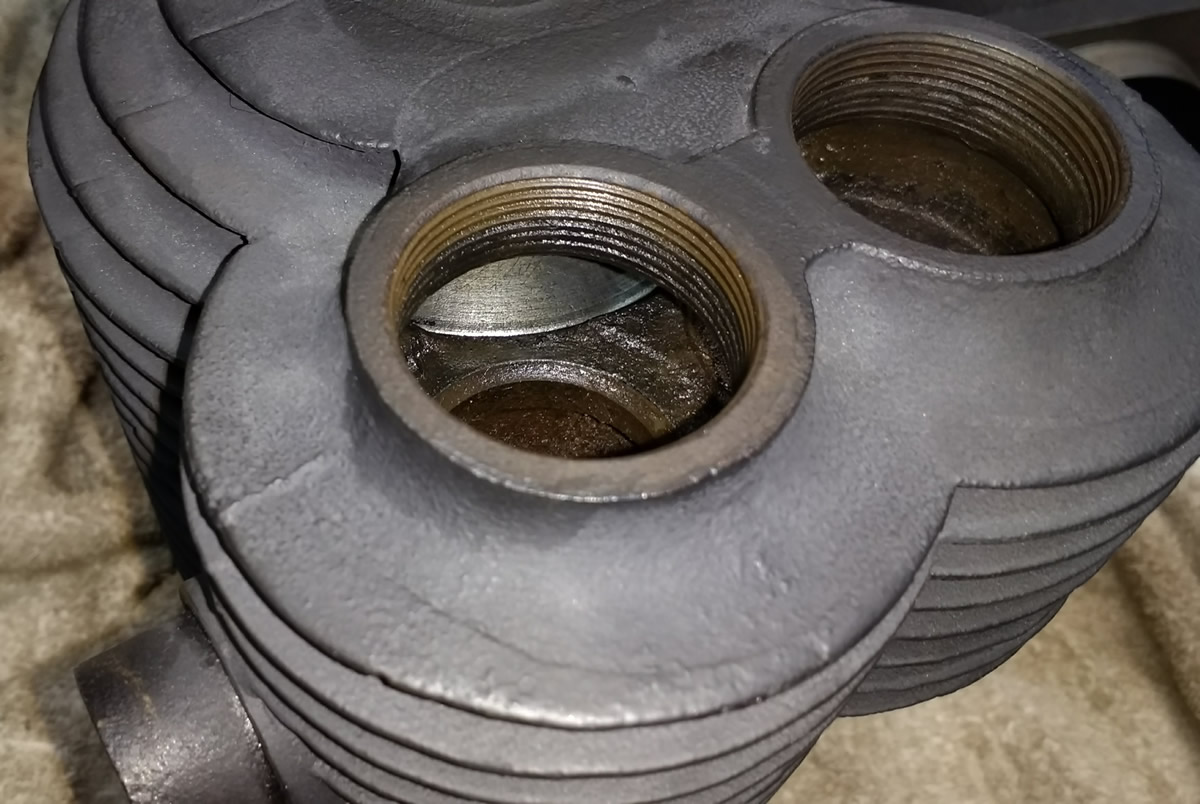
Filled with a measured amount of oil the combustion chamber or clearance volume was 186cc. This gives a compression ratio of 3.95:1
I measured the oil carefully as I put it in and again when I poured it out to ensure my calculations are correct.
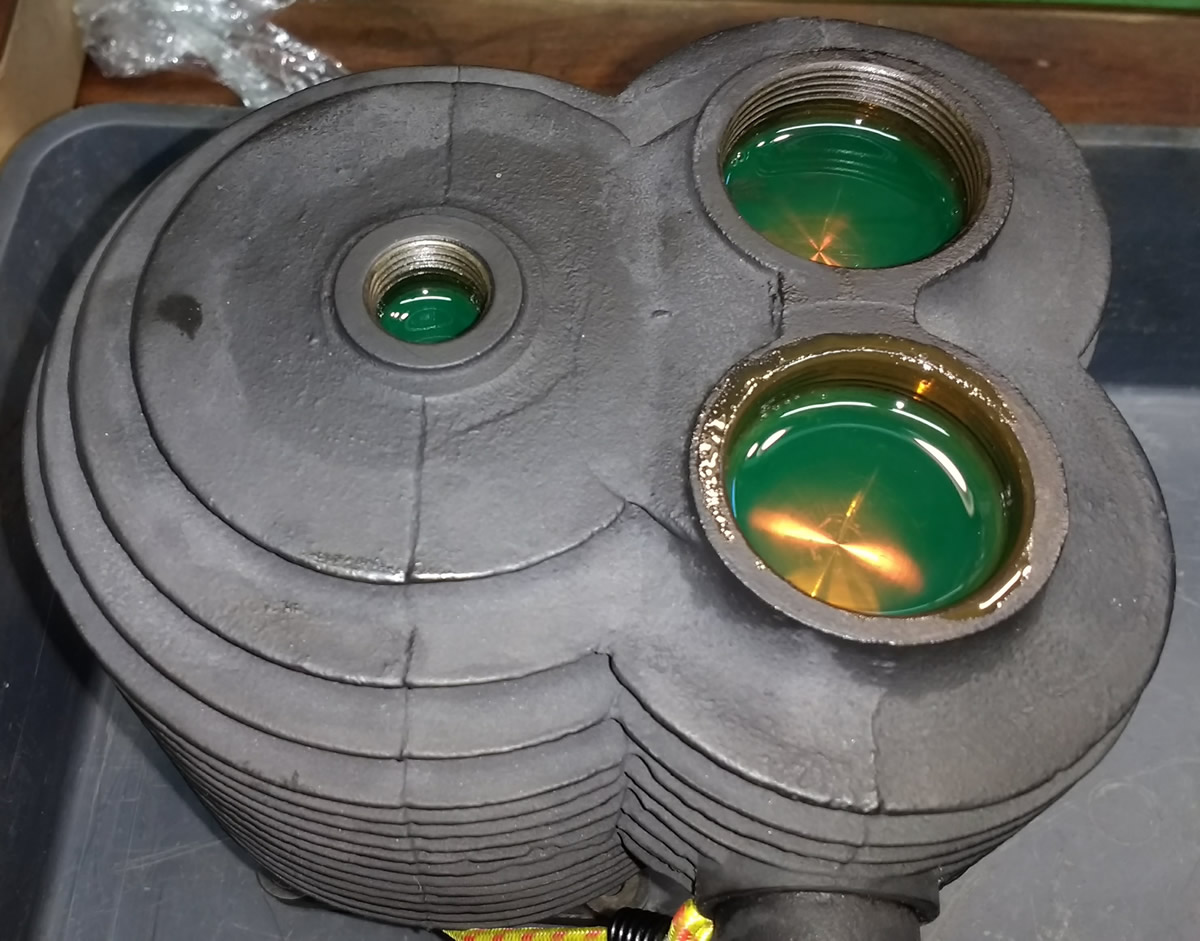
Then did the same for the big valve barrel. That had a volume of just 117cc. This equates to a compression ratio of 5.7:1.
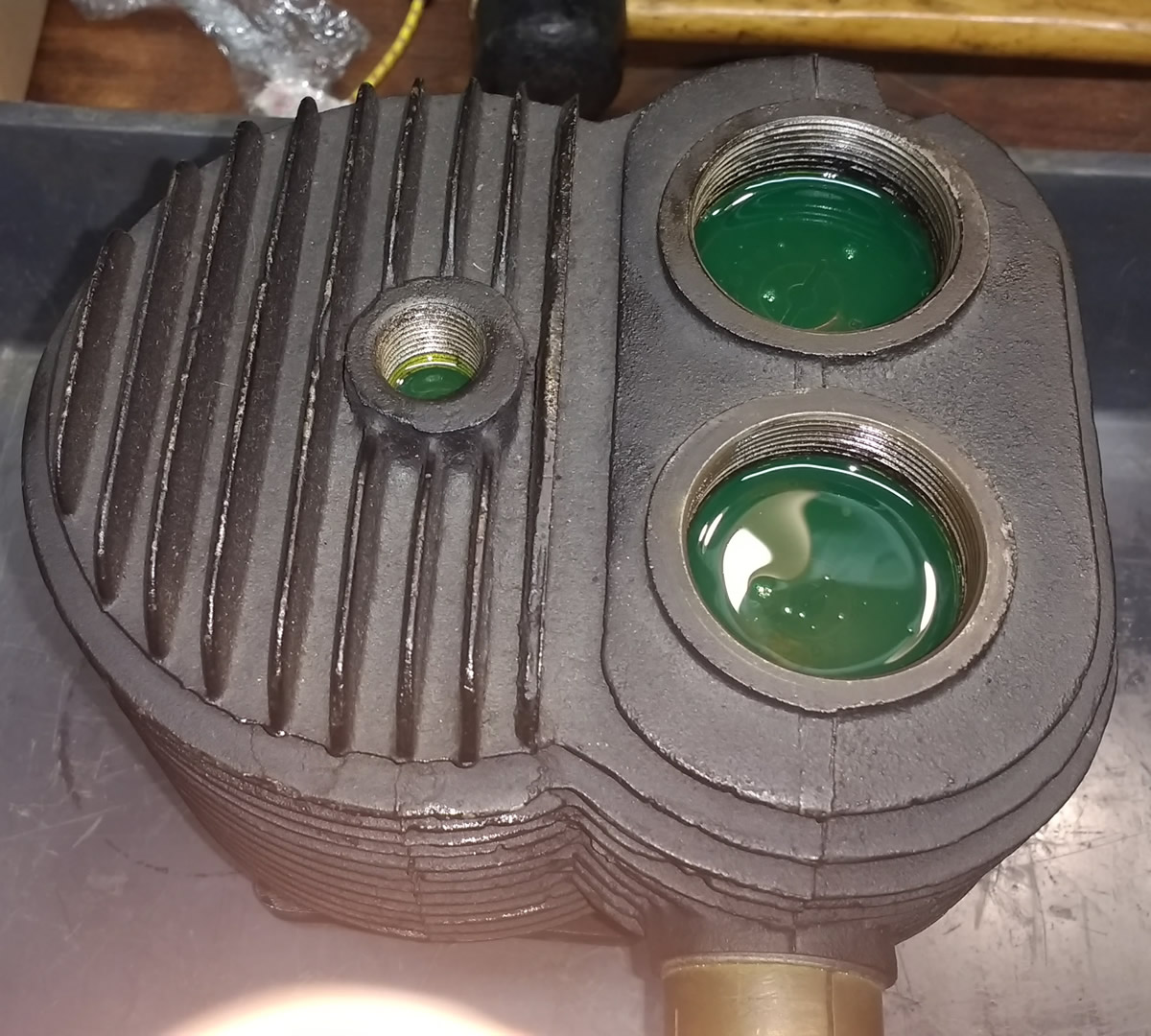
Next task is to work out the ideal compression ratio and either source a piston or a use a spacer under the barell to get the desired ratio.
After consideration and discussions with those in the know, I
shall be running a 5.7:1 compression ratio.
Currently just sorting some slightly longer studs to hold the barrel down and
then will grind in valves and motor is ready and I can move onto the frame.
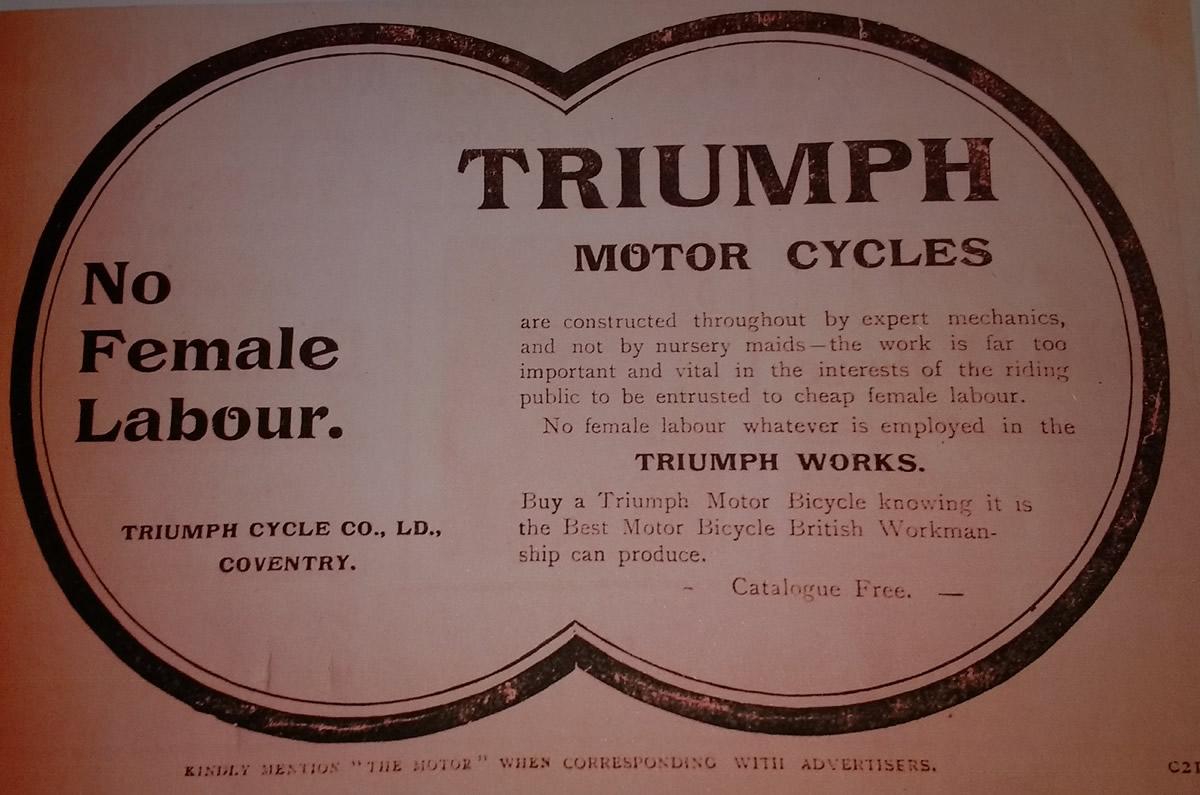
I wonder how this very early Triumph advert from 1904 was
taken by the women of the era?
Perhaps it was the tipping point that started suffragettes chaining themselves
to railings?
I have been asked to show pictures of the standard 1914 barrel and the big valve version and these are below.
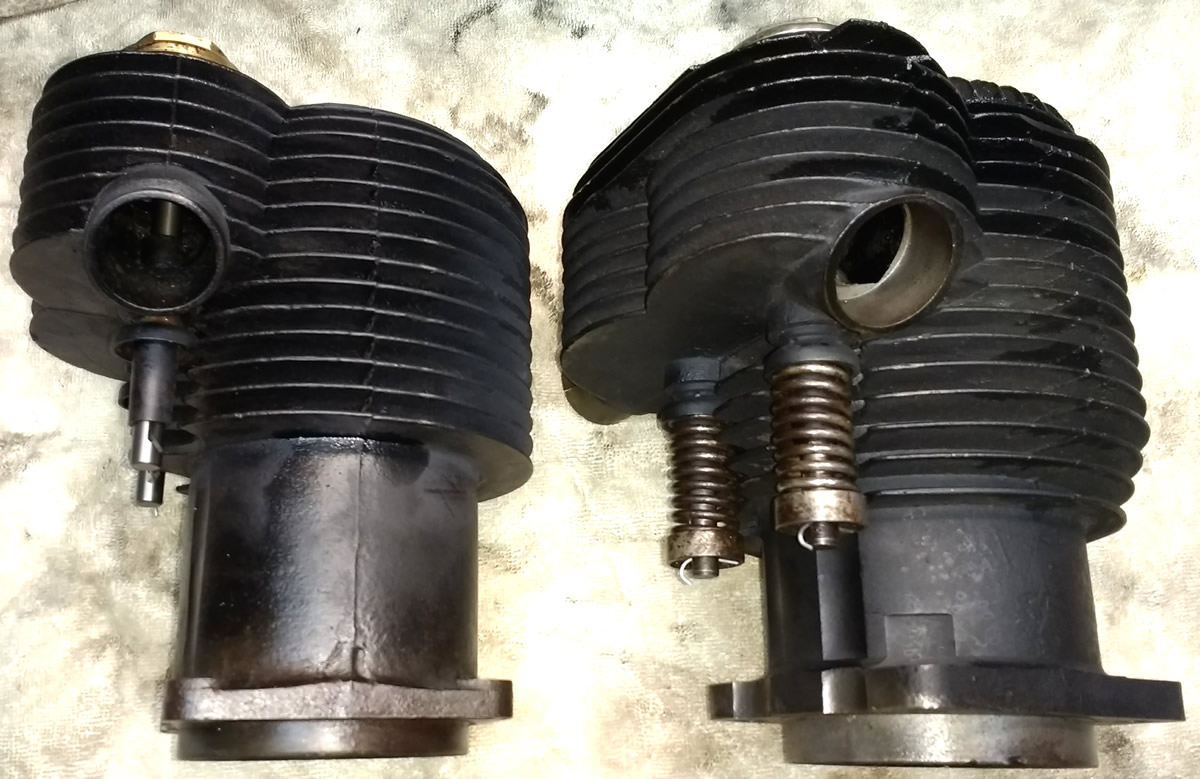
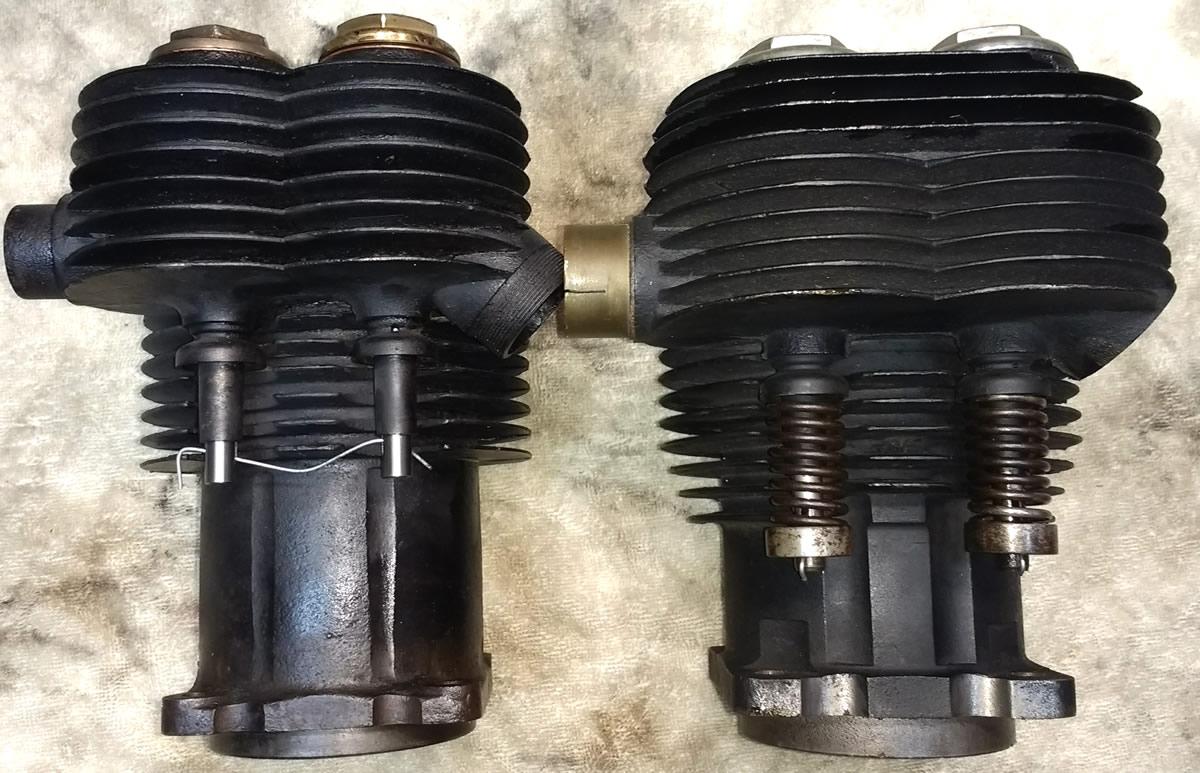
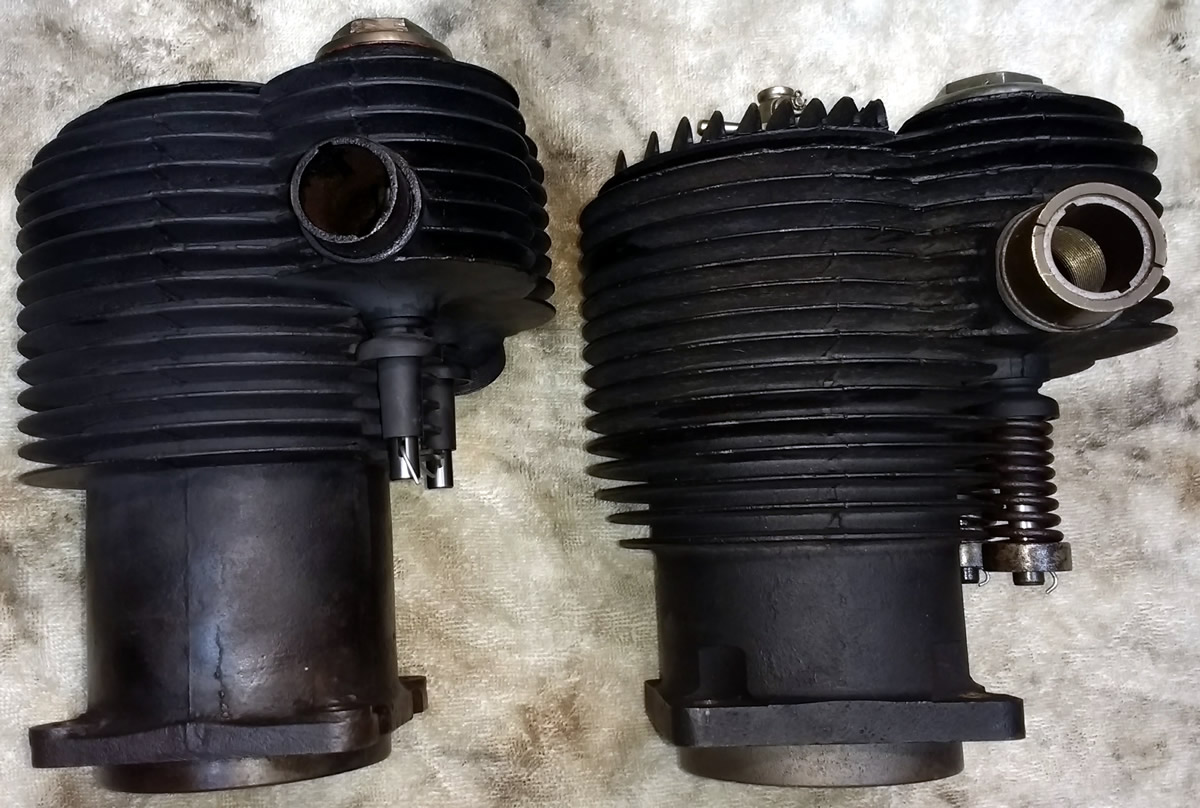
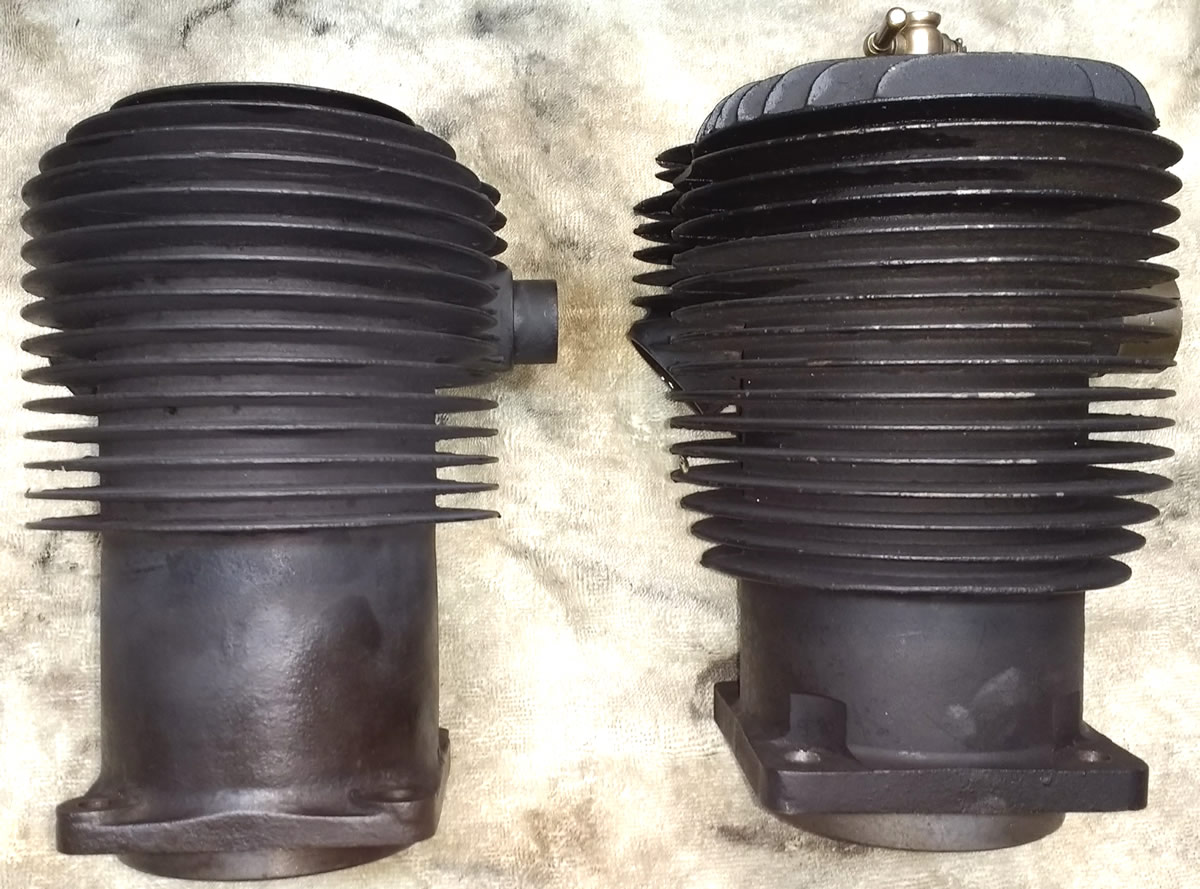
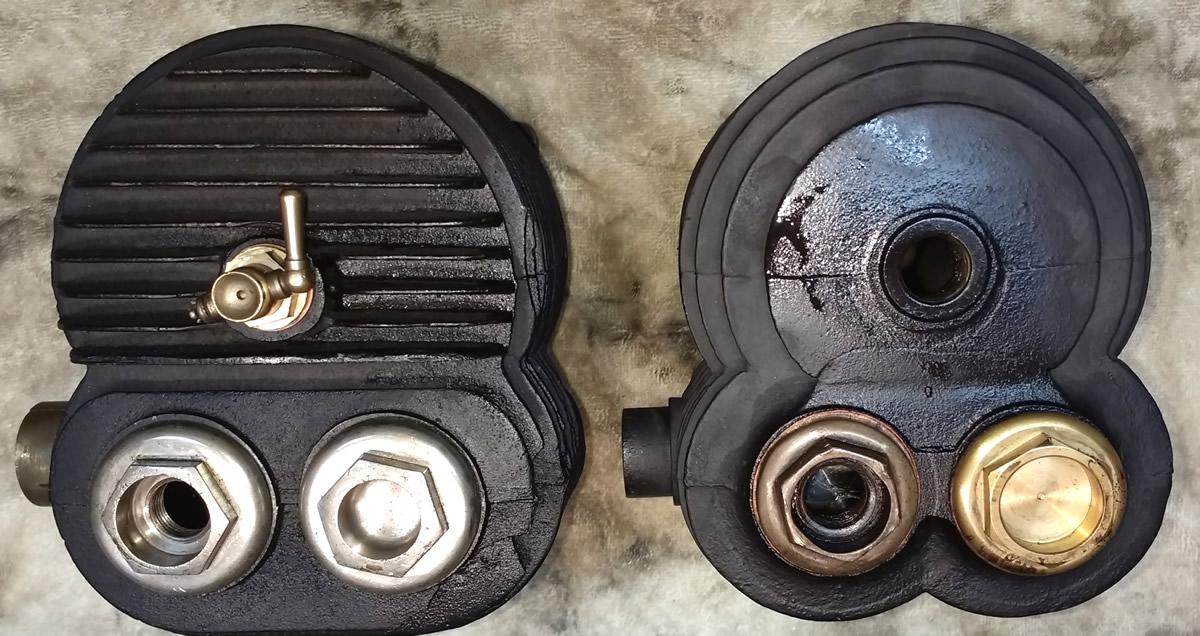
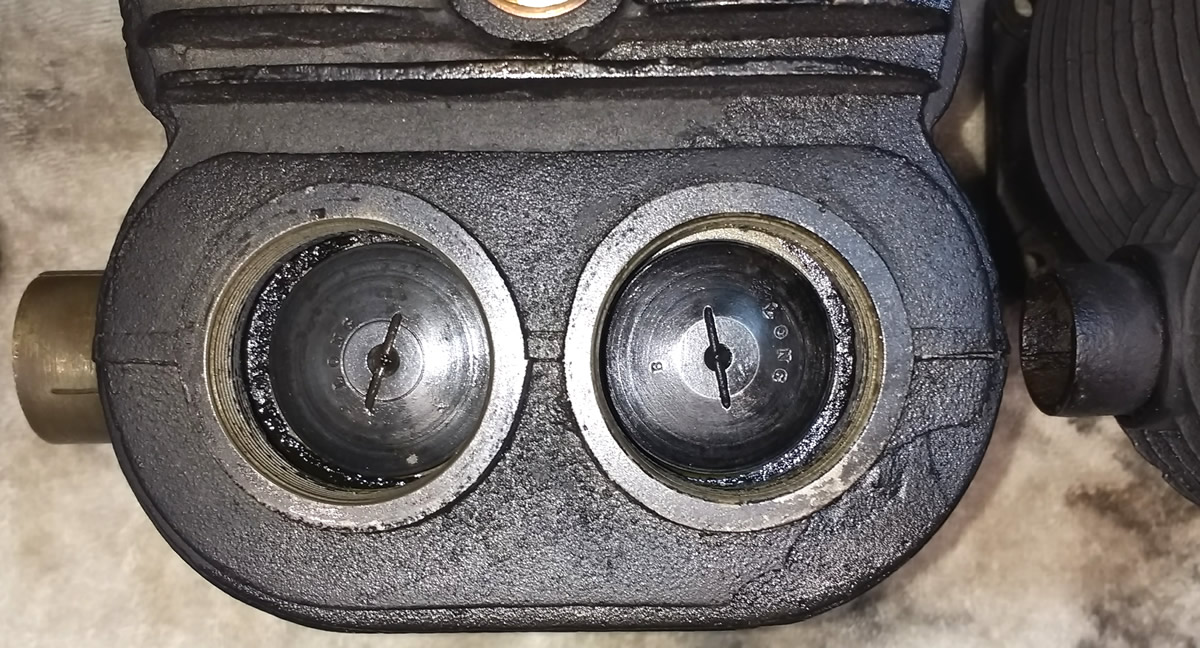
As I will have more compression and bigger valves I will be using a larger period carb as used on the period racers.
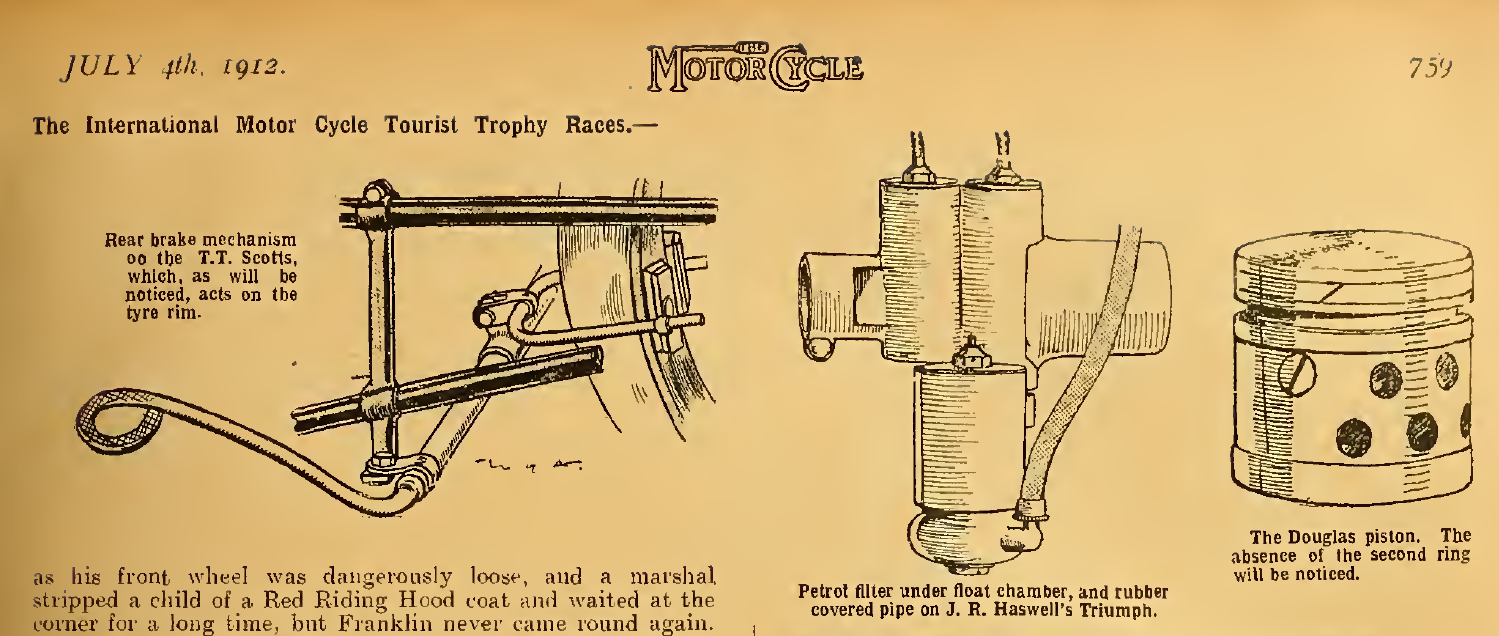
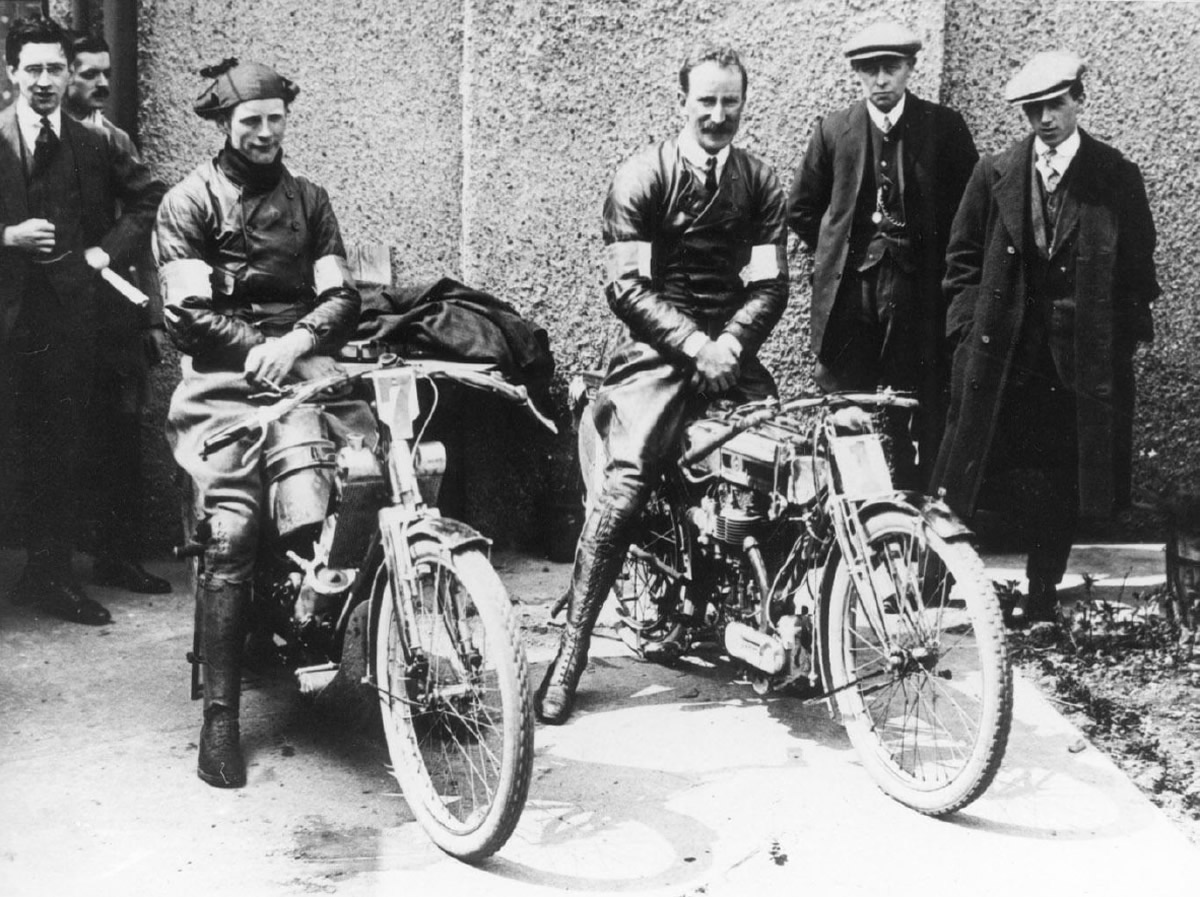
Below is works rider Haswell at the 1912 TT
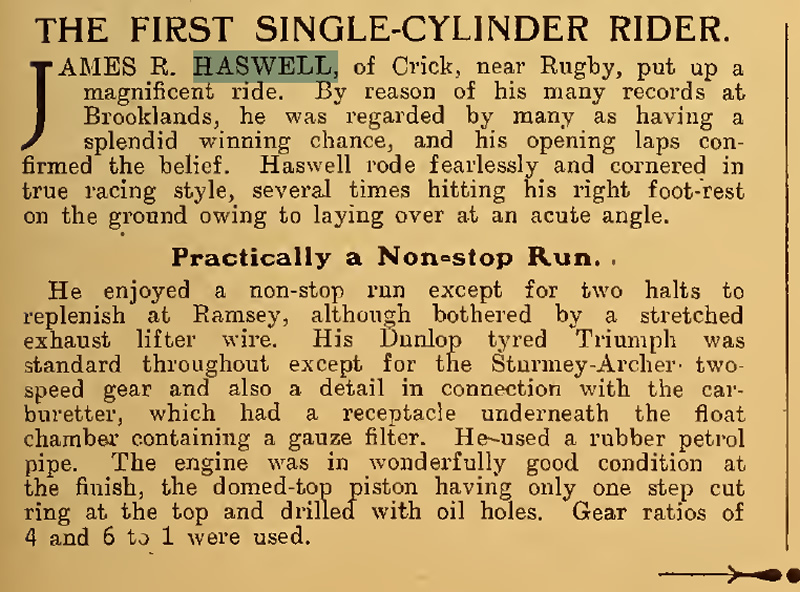
A period account of his riding and a reference to the piston type that I will be using.
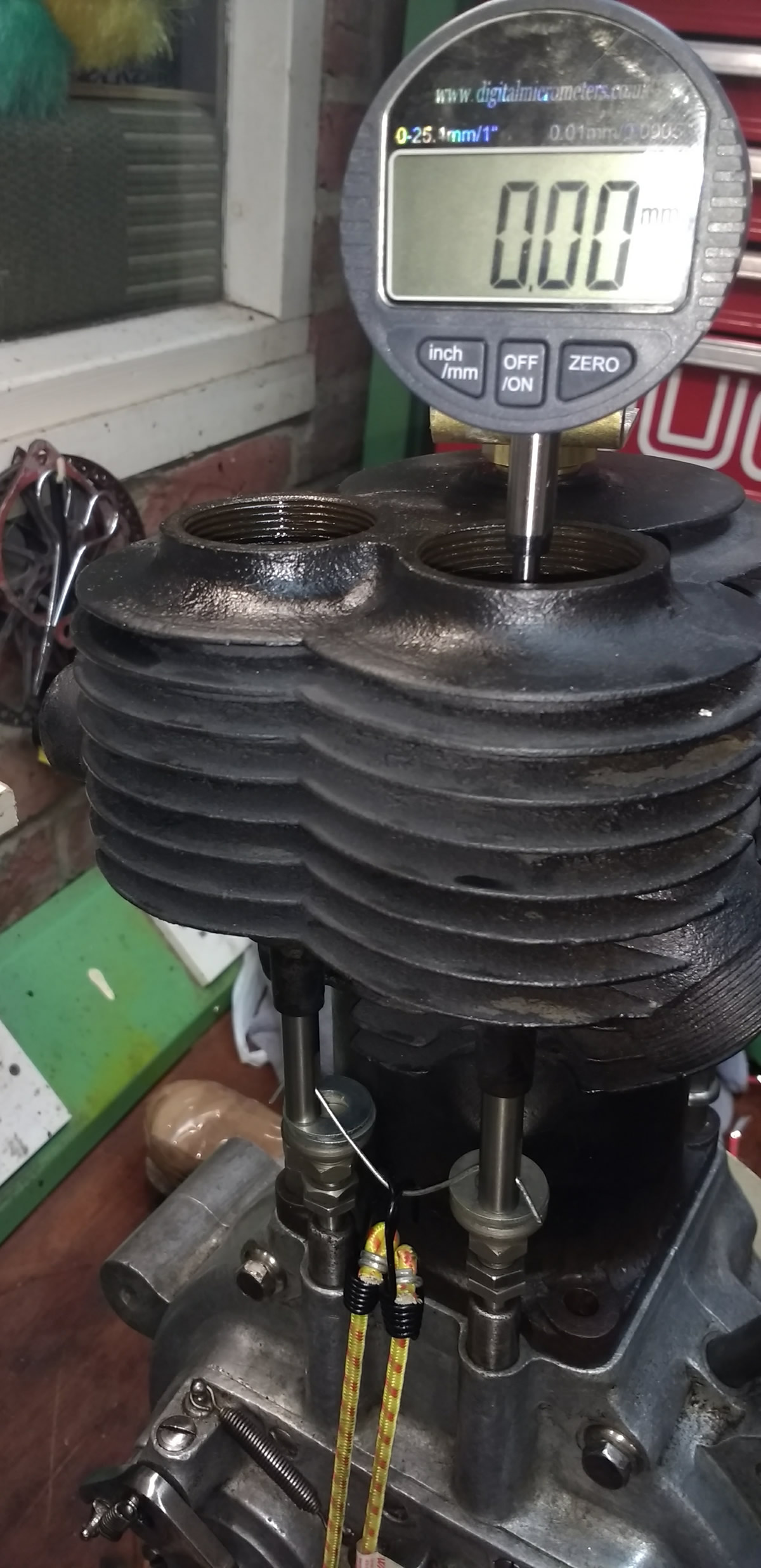
A one of the factors in an engines performance is the valve timing and lift, I thought I should measure this.
In the picture before the piston is brought to TDC and the white disc used to show where this is.
The engine can then be rotated 10 degrees at a time and the movement of the valves noted.
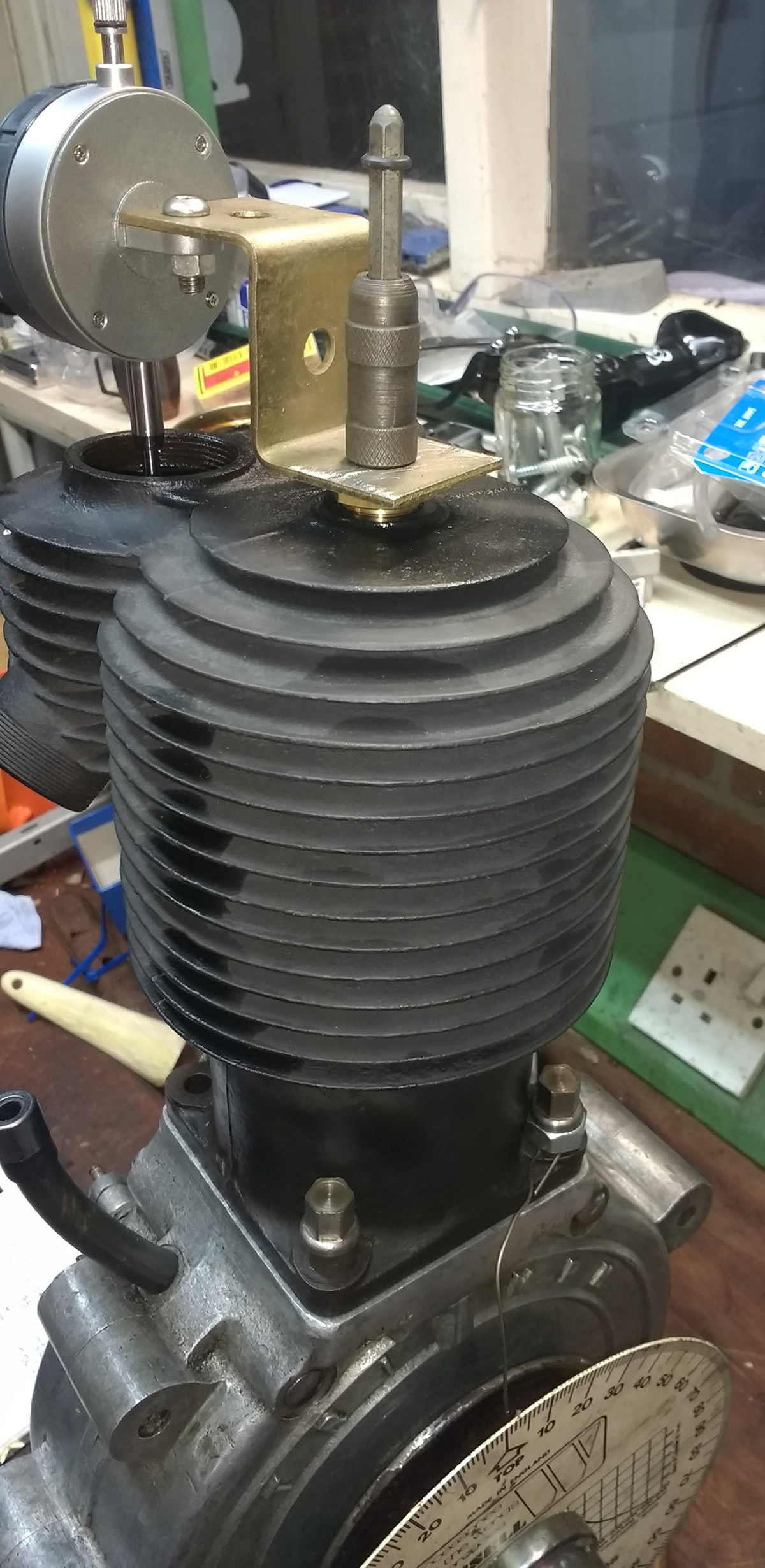
I removed any slack in the movement and setup the meter to 0.00 with the valve at its lowest point and then recorded the valve lift every 10 degrees.
This is done for both valves.
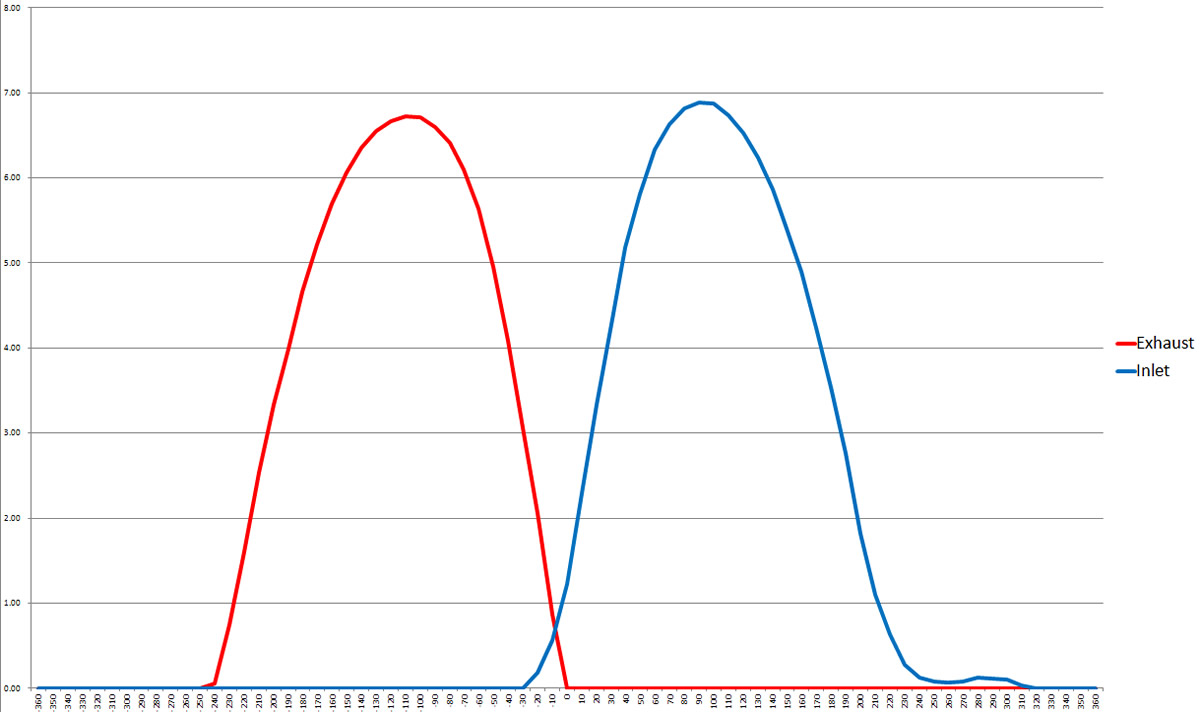
The cams lift the valves by almost 7mm and the map is below.
Whilst reading Tuning for Speed gives much info to tweak your engine, I need to research what was done and available pre 1915.
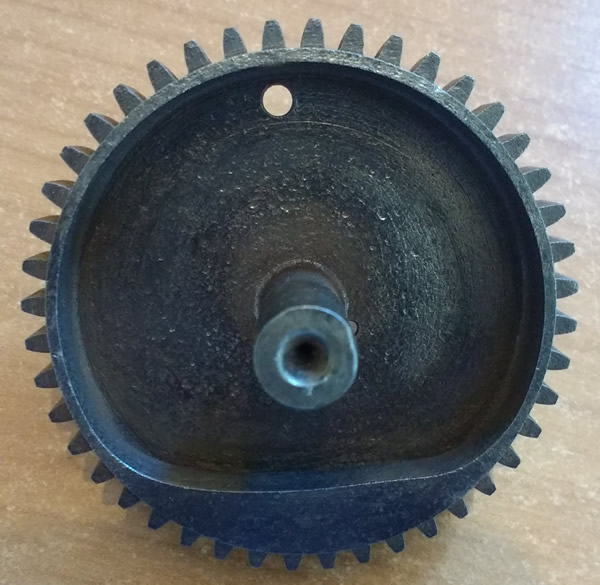
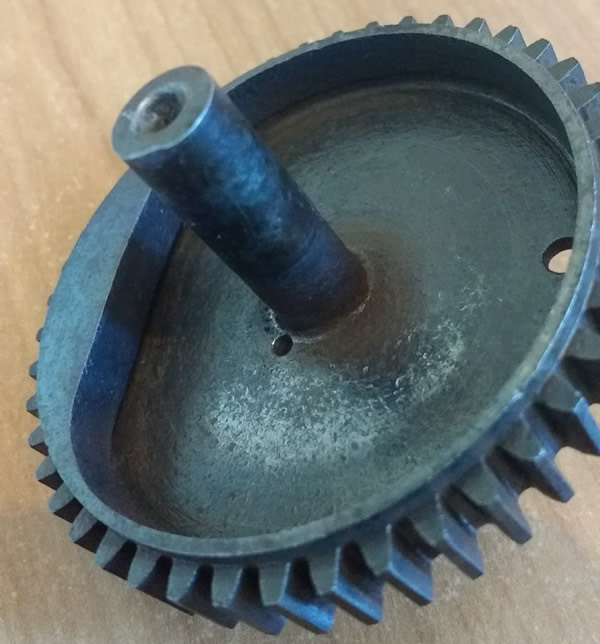
Each valve has its own cam so the engine is Twin Cam! and below is a cam - inventive having the cam profile on the inner side of the gear - I think.
So what might a 1914 Triumph be capable of ? Well in July 1914 The Wizard (George Enoch Stanley) ran one around Brooklands at 78mph.
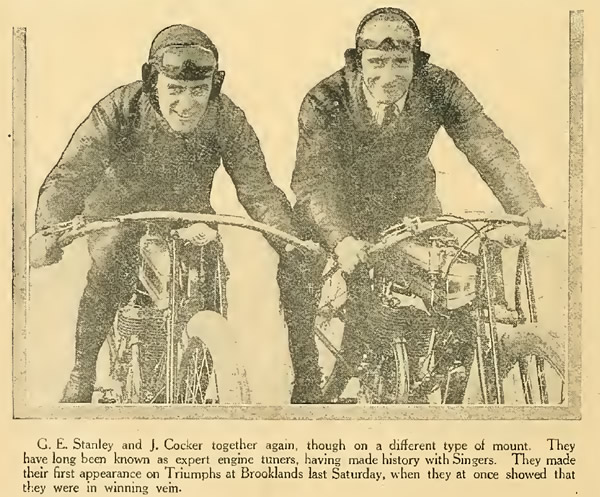
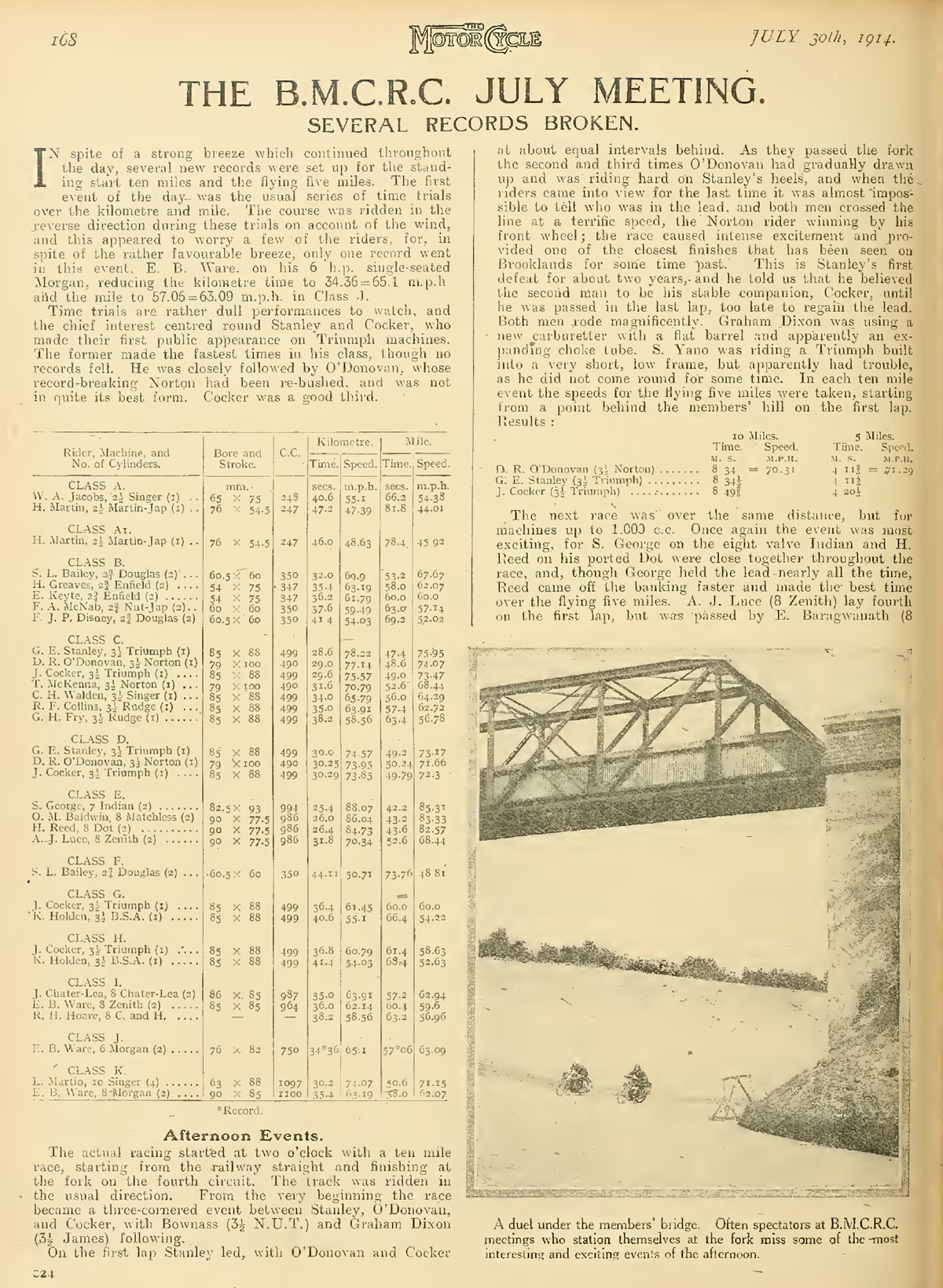
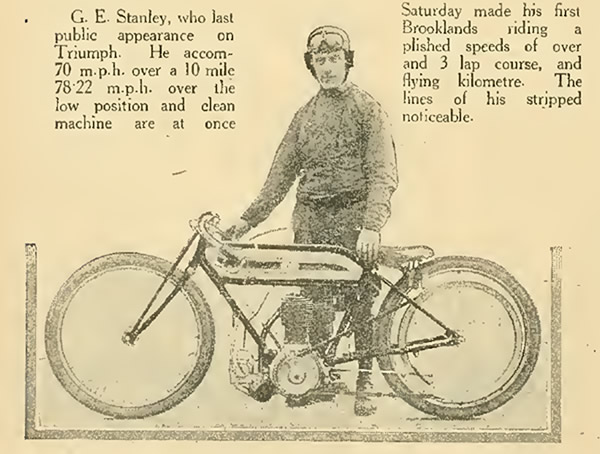
I suspect that GE Stanley's discovery and experimentation with valve overlap contributed to his success and becoming known as a tuning Wizard.
A little research seems to show he was aware of this from spring 1912.
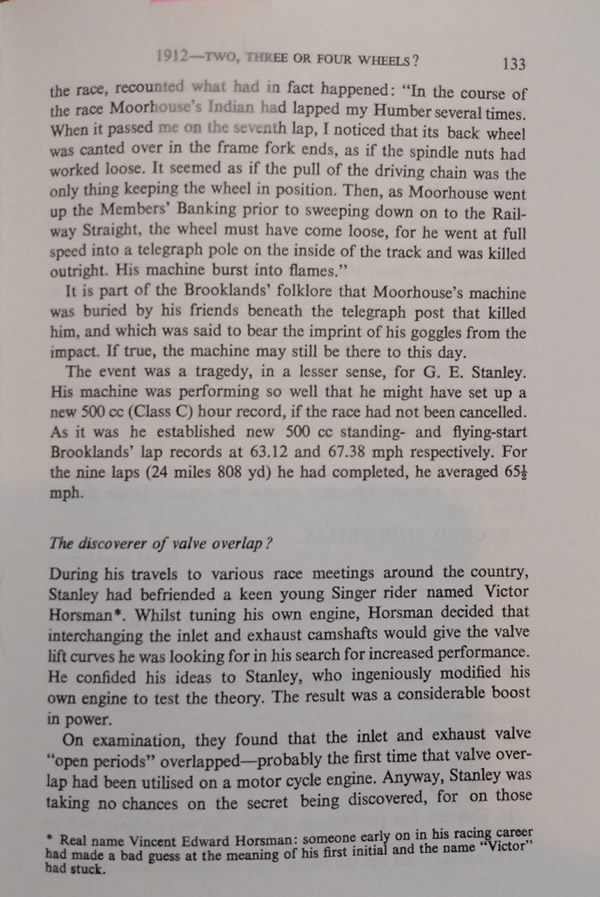
As The Great War kicked off in August 1914, Triumph and almost everyone else had other matters to attend to and racing took a back seat. Accordingly probably July 1914 was the peak of Triumph tuning.
The picture below shows TV Harrison at South Harting - which was a popular hill climb venue pre WW1. The event was on July 25th 1914 and he was the winner (naturally as he was on a Triumph).
He then set off on Saturday evening or Sunday and rode 150+ miles north and entered another event at Sutton Coldfield on the following Monday with a dawn start and set fastest time.
I suspect he had a close association with the Triumph factory as The MotorCycle of October 15th 1914 reports that 300 new Triumphs were being sent to Russia and that TV Harrison would be going with them.
I can find no further mention of him.
The picture came from Yesterdays via Ruud of http://www.veterantriumph.nl - Thanks Gents.
The bike is tuned for racing - big carb, empty silencer box etc.

Below is my Grandfather Tom on his 1911 Triumph that I now have back in the family.